
25-08-2026
UV Water Treatment: How UV Water Purifiers and RO-UV Filtration Systems Help Improve Water Quality
Water quality is an integral part of everyday health, hygiene, and household use. Different sources may contain microorganisms, dissolved substances, suspended particles, and other impurities. Choosing the right purification method depends on the type and level of contamination. Ultraviolet technology is commonly used for microbial disinfection, while reverse osmosis addresses dissolved impurities. Combining suitable technologies can provide broader treatment coverage.
UV Water Purification Technology
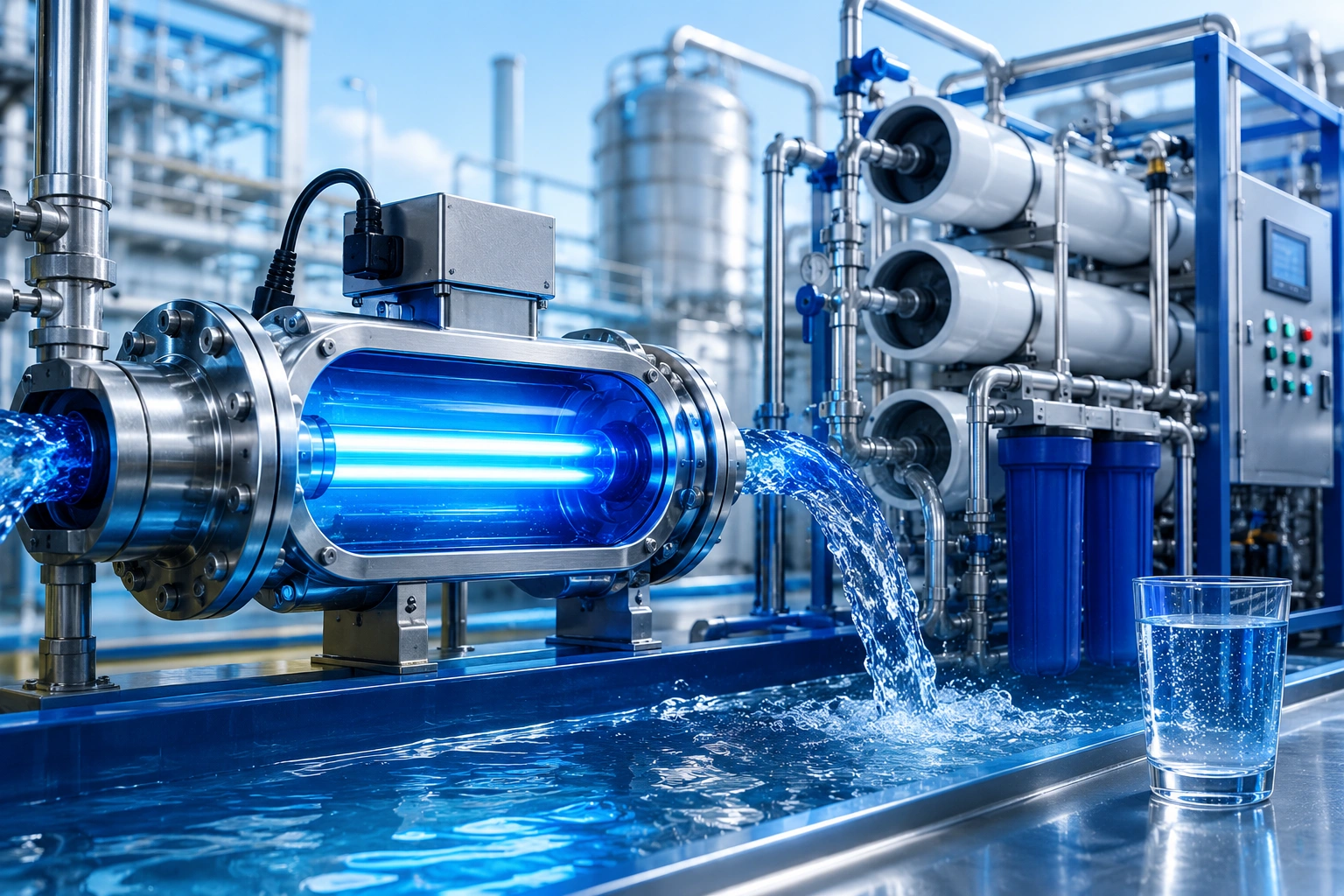
A UV water purifier uses ultraviolet light to deactivate microorganisms. The radiation targets microorganisms such as bacteria and viruses when water passes through a chamber fitted with a UV lamp. It controls biological contamination of water by maintaining the mineral characteristics of water.
The Role of UV in Water Treatment
UV water treatment plays a crucial role in improving the quality of water by using UV light to inactive harmful microorganisms. It particularly effective against bacteria and viruses by preventing them from reproducing. The effectiveness of microorganism deactivation depends on factors such as,
- Water clarity
- Flow rate
- UV Intensity
- Exposure time
UV Water Cleaning and Disinfection
UV water cleaning specialises in controlling the reproduction of microorganisms rather than removing every type of contaminant. Dissolved salts, heavy metals, suspended particles, or other physical impurities are not eliminated during this process. For this reason, UV technology is often incorporated into multi-stage purification systems alongside suitable filtration methods.
Reverse Osmosis and UV Filtration
Reverse osmosis UV water filtration combines two different treatment approaches that address different water-quality concerns.
| Feature | UV Treatment | Reverse Osmosis |
|---|---|---|
| Primary function | Microbial disinfection | Dissolved impurity reduction |
| Main targets | Bacteria, viruses, and microorganisms | Dissolved salts, solids, and certain contaminants |
| Chemical addition | Not required | Dissolved salt removal |
| Mineral retention | Generally retains minerals | Can reduce some naturally occurring minerals |
| Reject water | Produces little to no reject water during the treatment process. | Generates reject water because it is separated from the purified stream during RO filtration. |
| Main application | Primarily used for microbiological control and disinfection. | Mainly used to reduce dissolved contaminants and improve the chemical quality of water. |
Benefits of UV-Based Purification Systems
UV systems can provide several advantages when correctly selected and installed:
- Chemical-free microbial disinfection
- Minimal effect on water taste
- Effective control of many microorganisms
- Generally preserves naturally occurring minerals
- Can be integrated with other filtration technologies
- Suitable for residential, commercial, and industrial applications
Choosing a Suitable Purification System
The right purification setup depends on the characteristics of the water. Through a proper assessment it helps to identify the requirements and ensures the system is suited to actual usage conditions.
- Assess the water source and its characteristics before selecting a treatment setup.
- Consider microbial contamination, dissolved solids, daily consumption, etc.
- Review existing treatment equipment to identify additional purification needs.
- Conduct water testing to determine the contaminants present.
- Choose between a standalone disinfection unit and multi-stage purification system based on the results.
Importance of Regular Maintenance
Regular maintenance keeps purification equipment functioning effectively over time. Routine checks also help identify worn components and reduced performance, etc. Key maintenance requirements include;
- Replace UV lamps when their effectiveness decreases.
- Inspect and replace filters when they become clogged
- Follow the manufacturer's maintenance guidelines for servicing and component replacement.
- Carry out routine inspections to support efficient operation and consistent water quality.
Modern Water Purification Applications
Ultraviolet technology can form an important part of modern water purification systems. Its ability to provide chemical-free microbial disinfection makes it suitable for different residential, commercial, and industrial applications. Testing the source water and selecting equipment according to actual requirements remain essential for achieving reliable results.
Frequently Asked Questions
1. What factors affect the performance of a UV purification system?
Water flow rate, clarity, UV lamp intensity, exposure time, and the condition of system components can influence overall purification performance.
2. Is UV purification suitable for commercial and industrial applications?
Yes. UV systems can be designed for different flow capacities and integrated into commercial or industrial water treatment setups according to specific water-quality and operational requirements.
3. What should be checked before installing a UV purification system?
Before installing a UV purification system, consider checking the quality of water, source characteristics, flow requirements, and the type of contaminants present.
Latest Blogs
UV Water Treatment: How UV Water Purifiers and RO-UV Filtration Systems Help Improve Water Quality
Water Treatment Technologies: A Closer Look at Types, Benefits, Applications & Comparison

Water Treatment Solutions: Choosing the Right Partner for Your Enterprise

Drink with Assurance: The Top 10 Water Purification Techniques
